
🕐11 min read
In This Article
Dream Journal & Interpretation Kit
30-day dream journal with interpretation guides, symbol dictionary, and lucid dreaming techniques.
- The Neurobiology of Dreaming: How the Brain Constructs Sleep’s Alternate Realities
- From Symptom to Symbol: Psychoanalytic and Jungian Frameworks for Understanding Dream Content
- Dream Symbols Across Cultures: Why the Same Image Means Different Things in Different Worlds
- The Stages of Sleep: Why Not All Dreaming Happens in REM
- Practical Dream Recall: Why You Forget Dreams and How to Remember Them
- Lucid Dreaming: Waking Up Within the Dream
Have you ever woken from a dream so vivid, so emotionally charged, that the boundary between sleeping and waking felt paper-thin? Most of us experience 4 to 6 dreams per night, yet we remember only a fraction—usually the strangest, most troubling, or most enchanting ones. The architecture of dreaming itself remains one of neuroscience’s most compelling unsolved puzzles. We spend roughly 6 years of our lives dreaming, cycling through REM (rapid eye movement) sleep in 90-minute intervals, yet the *why* of dreaming—the actual mechanism and purpose—has sparked debate among researchers, psychologists, and dream workers for over a century. This guide moves beyond pop psychology dream dictionaries to examine how dreaming actually works: the neurochemistry that builds dream worlds, the cultural and psychological lenses through which different traditions interpret them, and the practical techniques you can use to remember, record, and lucidly navigate your own nocturnal narratives. Whether you’re a Jungian analyst, a neuroscience enthusiast, or simply someone tired of forgetting dreams the moment consciousness breaks through, understanding the machinery of dreaming transforms both how you sleep and how you understand yourself.
The Neurobiology of Dreaming: How the Brain Constructs Sleep’s Alternate Realities
When REM sleep begins—typically 90 minutes after you fall asleep, and recurring four to five times across the night—your brain enters a state of near-wakefulness without the governing structures that keep daytime consciousness coherent. The brainstem, specifically the pons (a region at the base of the brain), floods the cerebral cortex with acetylcholine, a neurotransmitter that activates sensory and emotional centers while simultaneously shutting down the dorsolateral prefrontal cortex, the region responsible for logic, time sense, and self-criticism. This neurochemical cocktail explains why dreams feel hyperreal yet internally contradictory—your visual cortex is firing at near-waking intensity, your amygdala (emotional center) is in overdrive, but your logical gatekeeper is offline. Functional MRI studies by researchers at MIT and UC Berkeley have mapped this process with precision: during REM, activation in the visual cortex increases by 40%, while activity in areas controlling rational evaluation drops by 30%.
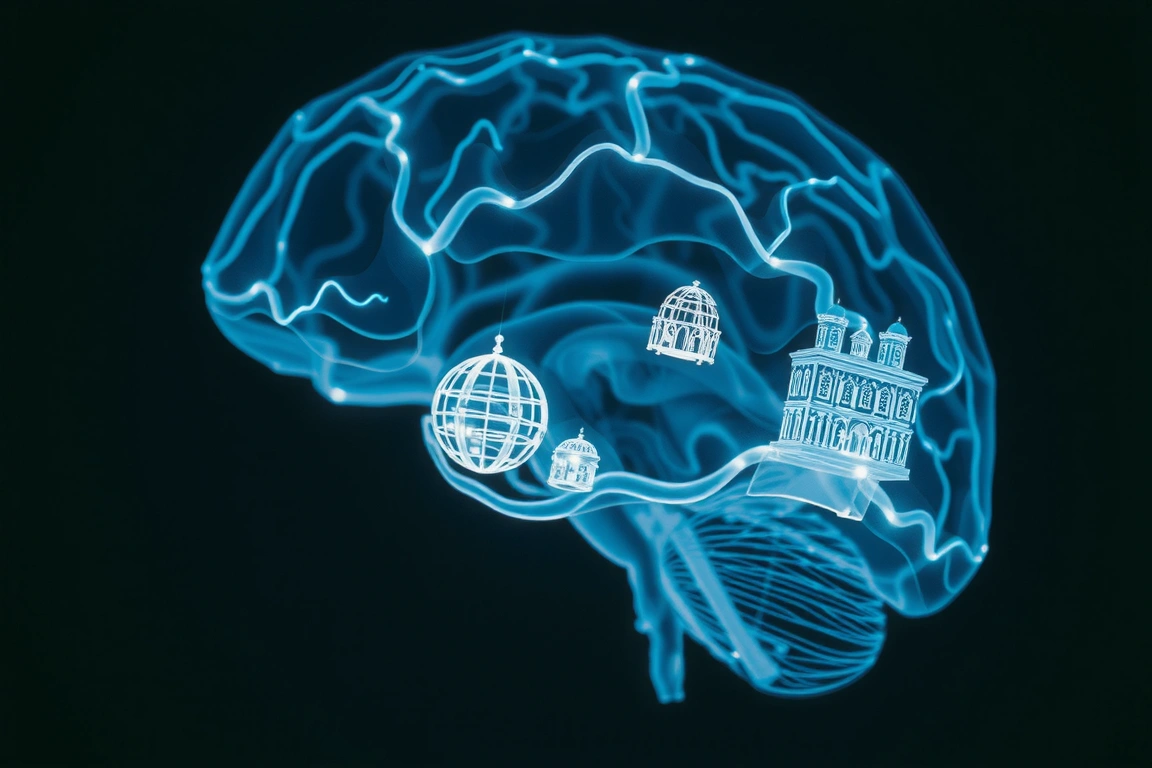
The resulting state produces what neuroscientist J. Allan Hobson termed the “activation-synthesis hypothesis” in 1977—the brain doesn’t receive coherent narrative input from the external world, so it synthesizes a story from the neuronal noise, memory fragments, and emotional residue churning through cortical networks. This process isn’t random. Researchers at Max Planck Institute found that dreams preferentially reactivate memories from the preceding 1 to 2 days (the “day-residue effect”), integrating them with emotionally significant material from weeks or months prior. The hippocampus, crucial for memory consolidation, shows distinctive patterns during REM: it decouples from the prefrontal cortex, meaning recent experiences aren’t immediately tagged as “real” or “significant”—they’re being processed, sorted, and woven into long-term storage without the daylight brain’s editorial hand. This is why you can dream of an old friend seamlessly merged with a stranger, or find yourself in your childhood home with your adult body—your sleep brain isn’t bound by consistency.
Each REM cycle lasts progressively longer across the night. The first REM period may run only 10 minutes; the final one, occurring in the hour before waking, can stretch 30 to 45 minutes. Total REM sleep accounts for 20-25% of adult sleep (newborns spend 50%, a fact that intrigues researchers studying REM’s role in neural development). This escalating REM architecture matters: longer dreams near morning tend to feel more elaborate, emotionally complex, and narratively coherent—possibly because your brain has had 4-5 prior cycles to warm up the machinery. Patients deprived of REM sleep for just one night show cognitive deficits in learning and emotional regulation; chronic REM deprivation correlates with increased anxiety and impaired memory. The system isn’t ornamental—it’s foundational to how you consolidate learning, regulate emotion, and maintain psychological stability.
From Symptom to Symbol: Psychoanalytic and Jungian Frameworks for Understanding Dream Content
When Sigmund Freud published *The Interpretation of Dreams* in 1900, he proposed that dreams were the “royal road to the unconscious”—direct expressions of repressed desires, particularly sexual and aggressive impulses, disguised through symbolic censorship. A dream of climbing stairs became a dream about sexual intercourse; a dream of losing teeth, castration anxiety. This literalist approach dominated early dream psychology, and while most contemporary researchers reject Freud’s reductionist sexuality, his fundamental insight persists: dreams express material your waking mind doesn’t easily access. The difference lies in what material, and what it signifies. For Freud, the dream’s *latent content* (its hidden meaning) was paramount; the *manifest content* (what actually happened in the dream) was merely camouflage. This binary thinking shaped a century of dream interpretation—the dream as text requiring decryption.
Carl Jung reframed this entirely. Rather than treating dreams as disguised wish-fulfillment, Jung saw them as compensatory, bringing unconscious material to consciousness not to hide it but to balance it. If you spend your waking life as a ruthlessly rational person, Jung argued, your dreams might overflow with emotional, instinctual, or magical content—not as repressed desire seeking expression, but as psychic self-regulation. A recurring dream of being chased isn’t necessarily a trauma marker; it might be the unconscious insisting on material (fear, vulnerability, shadow aspects of self) that the daytime personality avoids. Jung introduced the concept of the “archetypal” dream—images and scenarios that appear across cultures and centuries because they represent fundamental human patterns: the wise mentor, the shapeshifter, the descent into darkness, the return to light. He took dreams seriously as messages, not symptoms, and advocated active engagement: amplification (exploring the symbolic layers of a dream image), dialogue with dream figures, and integration of dream material into waking life. For a Jungian analyst, a dream of water doesn’t *mean* sexuality; it opens a conversation about the unconscious itself, its depths, its currents, its potential for drowning or nourishing.
Contemporary cognitive neuroscience occupies middle ground. Researchers like Antonio Damasio and Jaak Panksepp argue that dreams aren’t purely symbolic or purely neurochemical noise—they’re a form of emotional simulation. Your brain runs scenarios: threat responses, social interactions, emotional conflicts. These simulations feel real because the neural substrate generating them is nearly identical to waking perception. The amygdala’s heightened activation during REM means dreams are emotionally weighted; the weakened prefrontal cortex means there’s little critical distance. This framework honors both Freud’s insight (dreams reveal emotional truths) and Jung’s (they’re compensatory, bringing balance). A dream of being trapped in a collapsing building might reflect genuine anxiety about a work situation, but the building’s specific features—its architecture, exits, who’s present—encode how your brain is processing that anxiety, what solutions it’s rehearsing, what shadow aspects (your own destructiveness? your sense of powerlessness?) the scenario embodies. The dream isn’t a code to crack; it’s a simulation to examine.
Want deeper dream insights?
Free weekly — no spam, unsubscribe anytime.
Dream Symbols Across Cultures: Why the Same Image Means Different Things in Different Worlds
Water appears in the dream records of nearly every culture—but its significance varies radically. In Talmudic dream interpretation (systematized in the 4th-century Tractate Berachot), water represents Torah, wisdom, and abundance; deep water signals profound knowledge. In many African and Afro-diaspora traditions, water—especially the ocean or river—is a threshold space, a realm of ancestor communication and spiritual crossing. In Andean traditions, water that flows downward represents energy or sami (life force) moving toward the underworld and potential transformation. In medieval Islamic dream manuals like Ibn Sirin’s *The Dictionary of Dreams* (9th century), water’s meaning hinges on its state: clear water is blessing and clarity; turbid water, deception or illness. The European Romantic tradition (Coleridge’s “Kubla Khan,” Keats’s opium-laced reveries) coded water as the sublime, the dangerous edge of consciousness itself. None of these is “correct”—they’re all correct within their respective symbolic ecosystems.

This multiplicity matters because it reveals that dream interpretation isn’t translation from a universal dream-language into English. It’s *recognition within a specific symbolic context*. When you dream of water, you’re not accessing a fixed archetypal meaning; you’re working within the frameworks available to you—your cultural inheritance, your personal history, the symbolic traditions you’ve absorbed, the associations your own nervous system has built through lived experience. A water dream for someone raised in a drought-prone region carries entirely different emotional weight than one for someone from a coastal culture. An urban Westerner might associate water with emotions (Jungian depth psychology is so pervasive in Western culture it shapes how we dream); someone from a community where water is scarce might associate it with survival, blessing, or loss. The neurochemistry of dreaming is universal; the *meaning* is local and personal.
Cross-cultural dream research reveals patterns, not uniformities. Researcher Robert Van de Castle’s analysis of dream reports from 47 cultures found that certain themes do recur: flying, falling, being chased, being naked or inappropriately dressed, appearing in an exam unprepared. These likely reflect universal human anxieties and physical experiences (the vestibular system’s misfiring during REM can generate falling or weightlessness sensations). But the emotional valence and interpretation of these dreams varies. Flying, in Western psychology often coded as liberation or wish-fulfillment, appears in some Indigenous Australian traditions as a form of spiritual travel requiring specific preparation and respect. Being chased might signal danger in a Western psychological frame but communication or invitation in shamanic traditions where pursuing figures represent guides or allies. The dream symbol itself (water, fire, a particular animal) is culturally portable; its meaning is not. This is why working with dreams requires both universal knowledge—the neurobiology, the psychological patterns—and radical specificity—*your* water, *your* dreaming tradition, *your* associations.
The Stages of Sleep: Why Not All Dreaming Happens in REM
The standard model—that dreams happen exclusively during REM sleep—is a useful oversimplification that obscures important truths. While REM sleep is the most dream-rich stage, accounting for the longest, most visually vivid, most emotionally intense dreams, people also report dreams during non-REM (NREM) sleep, which comprises roughly 75% of the night. NREM sleep divides into three stages, progressively deeper. During stage 1 (light sleep, 5-10% of night), you’re still semi-aware; hypnagogic imagery—fragmentary visual or auditory hallucinations—might occur as you drift off. During stages 2 and 3 (deeper sleep), your brain consolidates procedural and declarative memory. Dreams during NREM stages tend to be shorter, more thought-like, less visually elaborate, and closer thematically to waking concerns. Someone might have a NREM dream about work problems, which feels more realistic and less symbolically charged than a surreal REM dream of the same content.
Sleep architecture cycles: roughly 10 minutes of stage 1, 20 minutes of stage 2, 30 minutes of stage 3 (deep sleep), then a brief return through stages 2 and 1 before entering the first REM period. This 90-minute cycle repeats 4 to 6 times per night, but the balance shifts. Early cycles feature more deep (stage 3) sleep; later cycles feature longer, more intense REM periods. This explains why you’re more likely to remember dreams from the latter part of the night—you’re waking during or immediately after REM, before the dream fades from working memory (dreams fade rapidly; within 5 minutes of waking without recording them, 50% is forgotten; within 10 minutes, 90%). If you wake after 6 hours of sleep, you’ve had only one substantial REM period; by 8 hours, you’re in the midst of the third or fourth, which is why “sleeping in” often produces vivid dream memories. The practical implication: your dream recall is partly a function of when you wake relative to your REM cycles, not just whether you’re a “dreamer” or not.
Medication and substances heavily distort this architecture. SSRIs (selective serotonin reuptake inhibitors, used for depression and anxiety) suppress REM, which is partly why people on antidepressants sometimes report less vivid dreaming—though they often experience a surge in dream intensity when they discontinue the medication (REM rebound). Alcohol, particularly in higher doses, fragments REM sleep; you might get less total REM and experience less coherent dreams. Cannabis use before bed typically suppresses REM; chronic users who quit often report a dramatic increase in vivid, sometimes nightmarish dreams as the system recalibrates. Benzodiazepines reduce REM and deep sleep. Understanding your own sleep architecture—whether you naturally sleep 7 hours or 9, when you tend to wake, what substances you consume—helps explain not just whether you remember dreams, but what *kind* of dreams you’re likely to experience. A person who sleeps 6 hours before waking to an alarm might never reach the long REM periods of late sleep; their dream recall will skew toward the lighter, more fragmentary dreams of early cycles.
Practical Dream Recall: Why You Forget Dreams and How to Remember Them
Forgetting dreams isn’t a failure—it’s the default state of consciousness. The neurochemical conditions that generate dreams actively work against memory encoding. During REM sleep, norepinephrine, a neurotransmitter critical for memory formation, drops to nearly zero levels. Your brain is generating vivid experience while simultaneously losing the biochemical capacity to tag that experience as “important, store this.” The moment you wake, a different neurochemistry takes over; norepinephrine floods back in, serotonin and other neurotransmitters reset, and the dream-world logic that made perfect sense 30 seconds ago becomes alien. This isn’t a design flaw—it’s adaptive. If you retained every dream with the vividness of waking memory, you’d struggle to distinguish actual experience from simulated experience, actual danger from rehearsed danger. The amnesia is protective. But it also means that dream work requires intention and tools.

The single most effective intervention for dream recall is a dream journal kept bedside with a pen that requires minimal waking effort. The specific mechanism: the moment you wake, before checking your phone or getting out of bed, you spend 2 to 3 minutes capturing whatever dream fragments linger. You don’t need full narratives. One study by psychologist William Domhoff found that people who recorded dreams immediately upon waking, even in point form, increased dream recall from the average of 1-2 per week to 6-8 within two weeks. The act of writing—or even speaking aloud, if you’re capturing dreams verbally—seems to cement the memory, though the exact mechanism isn’t entirely clear. Plausible explanations include: the physical movement of writing activates motor cortex regions adjacent to memory centers; the attention required to write forces working memory to sustain the dream; the deliberate act signals to your brain that dreams are valued information worth preserving.
Secondary practices amplify this effect. Setting an intention before sleep—explicitly deciding “I will remember my dreams”—correlates with increased recall. Researchers attribute this to priming: you’re essentially creating an attentional bias, a standing instruction to your waking mind to prioritize dream material. Keeping sleep consistent (going to bed and waking at the same time) regularizes your sleep architecture, making REM cycles more predictable and dream-heavy awakenings more likely. Avoiding alcohol and excessive caffeine, which fragment REM sleep, means longer, more coherent dreams. Some practitioners recommend setting an alarm for 4.5 or 6 hours into sleep (timing the first or second full REM cycle), waking briefly to record dreams, then returning to sleep. This is aggressive and isn’t necessary for most people, but it works: by waking mid-REM, you’re capturing dreams at their peak vividness. B6 (pyridoxine) supplementation, taken 30 minutes before bed at 100-200 mg, has preliminary evidence supporting its role in dream vividness—though the effect is modest and not universal. The standard approach remains simpler and more reliable: bedside journal, 2-3 minutes of capture immediately upon waking, consistency.
Lucid Dreaming: Waking Up Within the Dream
Lucid dreaming—the experience of becoming aware that you’re dreaming while still in the dream—sits at an unusual intersection of neuroscience and subjective experience. For decades
Related from our network
- Complete Guide: Ultimate Guide (smarthomegearreviews)
- Complete Guide: Complete Beginner Guide (permaeasy)
- Complete Guide: How Does It Work (dogbreedco)
You Might Also Like


What Are Your Dreams Telling You?
Join The Dream Files — weekly dream symbols, hidden meanings, and the archive that maps 4,000 years of the subconscious.
No spam. Unsubscribe anytime.
