
🕐11 min read
In This Article
Dream Journal & Interpretation Kit
30-day dream journal with interpretation guides, symbol dictionary, and lucid dreaming techniques.
- The Architecture of the Unconscious: Defining the Shadow
- Jung’s Method: Active Imagination and Symbolic Language
- Cross-Cultural Mirrors: The Shadow in Global Traditions
- A Practical Toolkit: Engaging Your Dream Shadow
- The Alchemical Result: From Conflict to Wholeness
- Navigating the Risks: When to Seek Guidance
- Sources & further reading
You wake with a start, heart pounding, the afterimage of a dark figure or a forgotten room seared into your mind. It feels alien, unsettling, a piece of a puzzle that doesn’t belong to you. But what if that very dream fragment, that shadowy intruder, holds the key to a part of yourself you’ve been systematically ignoring? The concept of the Shadow Self, as articulated by psychiatrist Carl Jung, isn’t about evil. It’s about disowned potential. Jungian dream analysis operates on a radical premise: your unconscious isn’t trying to scare you; it’s trying to complete you. By learning its symbolic language, you begin a process of integration that can transform creative blocks into flow, passive resentment into healthy assertion, and vague anxiety into focused energy. This isn’t pop psychology—it’s a meticulous, often uncomfortable, archaeological dig into the psyche, documented in over 20,000 pages of Jung’s Collected Works and validated by modern studies on dream incubation and emotional processing.
9 min read
In This Article
- The Architecture of the Unconscious: Defining the Shadow
- Jung’s Method: Active Imagination and Symbolic Language
- Cross-Cultural Mirrors: The Shadow in Global Traditions
- A Practical Toolkit: Engaging Your Dream Shadow
- The Alchemical Result: From Conflict to Wholeness
- Navigating the Risks: When to Seek Guidance
Key Takeaways
- The Architecture of the Unconscious: Defining the Shadow
- Jung’s Method: Active Imagination and Symbolic Language
- Cross-Cultural Mirrors: The Shadow in Global Traditions
- A Practical Toolkit: Engaging Your Dream Shadow
The Architecture of the Unconscious: Defining the Shadow
Carl Jung didn’t invent the idea of a hidden self; he gave it a clinical framework. He proposed the psyche is structured, with the Shadow comprising the aspects of our personality we deem unacceptable. These aren’t just “bad” traits. They can be positive qualities—like ambition, sensuality, or artistic talent—that were shamed or suppressed in childhood. A 2013 study in the journal Dreaming found that dream characters perceived as threatening often embody qualities the dreamer consciously rejects but unconsciously possesses. The Shadow isn’t a monolithic villain. It’s a repository. Think of it as a psychological basement where you’ve stored everything that didn’t fit the “acceptable” self you presented to your family, culture, or your own internal critic. Ignoring it doesn’t make it disappear; it gives it autonomous power, causing it to erupt in disproportionate anger, irrational fears, or compulsive behaviors. Jung famously stated, “Until you make the unconscious conscious, it will direct your life and you will call it fate.”

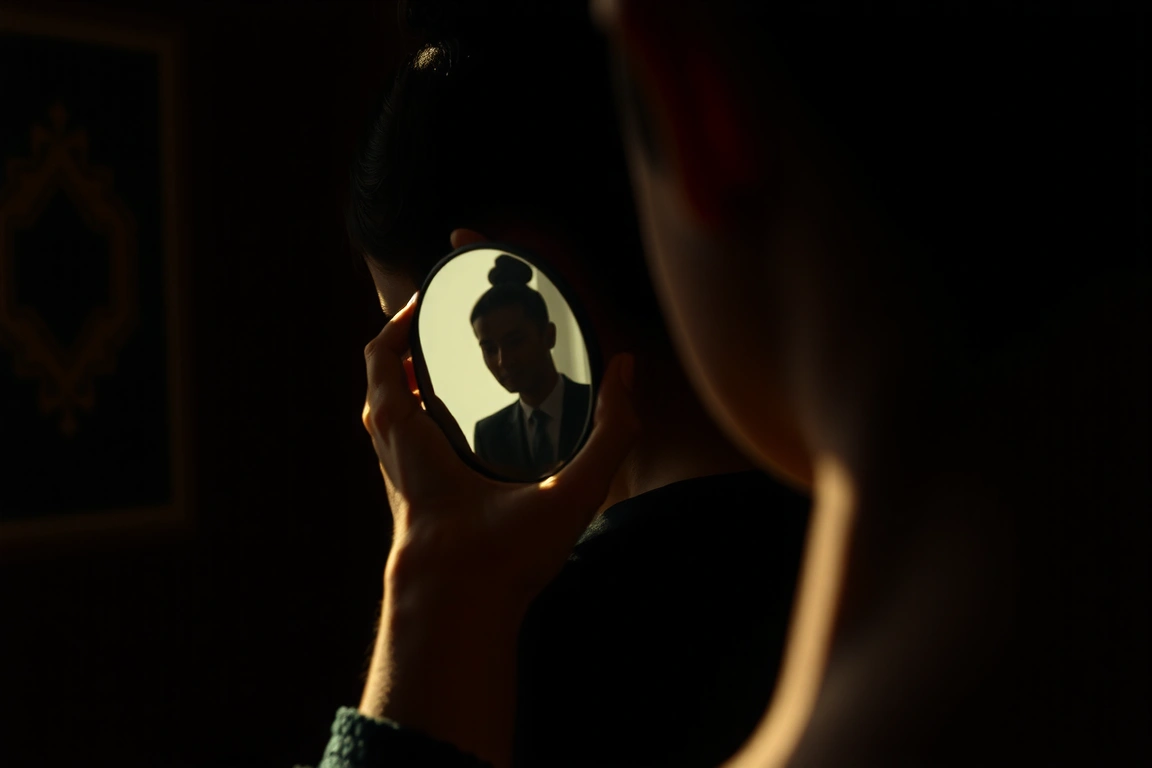
This process of making the unconscious conscious is called individuation. It’s the lifelong project of becoming a whole, integrated person by acknowledging and negotiating with these disowned parts. The Shadow is the first major archetype one encounters on this path. It’s gatekeeper to the deeper layers of the personal and collective unconscious. Failure to engage with it leads to a phenomenon Jung termed “projection,” where we unconsciously attribute our own Shadow qualities to others, seeing in them the greed, laziness, or aggression we refuse to acknowledge in ourselves. This is why certain people trigger inexplicably strong reactions in us; they are mirrors reflecting our own hidden faces.
This is why certain people trigger inexplicably strong reactions in us; they are mirrors reflecting our own hidden faces.
Jung’s Method: Active Imagination and Symbolic Language
Jungian analysis diverges sharply from Freudian free-association. Where Freud sought to reduce symbols to repressed sexual trauma, Jung amplified them. His technique, Active Imagination, is a deliberate, waking-state dialogue with dream images. You don’t just interpret the shadowy figure; you ask it questions. “What do you want from me? Why have you come?” The goal isn’t to conquer the image, but to converse with it, to understand its function within your psychic ecosystem. Jung documented a famous case of this with a patient haunted by a dream of a menacing dark figure. Through Active Imagination, the patient discovered the figure was guarding a treasure—a latent creative talent the patient had buried under a facade of pragmatic conformity.
Dreams speak a symbolic language, and Jungian analysts are trained in symbolic literacy. A snake isn’t automatically a phallic symbol; in Jungian view, it could represent healing (the caduceus), transformation (shedding skin), or hidden wisdom. Context is everything. The setting, the dreamer’s emotional response, and recurring motifs build a personal mythology. Analysts use tools like amplification, comparing the dream symbol to its appearances in mythology, alchemy, and world religions to uncover its universal, archetypal layer. For instance, a dream of falling into a deep well might be amplified by the Greek myth of Persephone’s descent into the underworld—a story not of damnation, but of necessary descent that leads to a new form of power and sovereignty upon return.
Common Shadow Archetypes in Dreams
- The Dark Stranger/Follower: Appears as a silent figure in a coat, a face in a crowd, or someone watching from a distance. This often represents the sheer unknown quantity of the Shadow, the part of the self that feels utterly foreign.
- The Critic/Saboteur: Manifests as a mocking voice, a figure that ruins your plans, or a doppelgänger who humiliates you. This facet holds your repressed self-doubt and fear of failure, often formed from internalized childhood judgments.
- The Wild Animal: A wolf, a bear, a large black dog. This symbolizes instinctual energy—raw anger, sexual drive, or primal survival instincts—that has been caged by an overly civilized persona.
- The Repulsive or Diseased Figure: A beggar, a sick person, a monster. This figure frequently carries what Jung called the “gold in the shadow.” The qualities we find most disgusting can, when integrated, become sources of profound compassion or resilience.
The Repulsive or Diseased Figure: A beggar, a sick person, a monster.
Want deeper dream insights?
Free weekly — no spam, unsubscribe anytime.
Cross-Cultural Mirrors: The Shadow in Global Traditions
While Jung provided a Western psychological model, the concept of a hidden self that must be integrated is a global human intuition. In Tibetan Dream Yoga, a 1,000-year-old Vajrayana Buddhist practice, practitioners train to recognize dream figures as projections of their own mind. The central technique involves confronting fearful dream entities not with flight, but with inquiry and merging, transforming the fear into lucid awareness. Similarly, the Shinigami of Japanese folklore—gods of death that sometimes appear in dreams—are not merely omens. In some interpretations, they represent the inevitable shadow of mortality, and encountering them can catalyze a profound shift in life priorities, a phenomenon echoed in modern near-death experience research.
West African traditions, such as those of the Dagara people as documented by malidoma Somé, view the psyche as a community. Disturbing dreams are not pathologies but messages from the “ancestral realm” or the “bush soul,” indicating a part of the individual’s spirit that has become lost or disconnected due to trauma or cultural displacement. The healing involves ritualized reintegration. These parallels suggest that Jung didn’t discover the Shadow so much as clinically describe a psychic reality that shamans, mystics, and artists have navigated for millennia. The modern dreamer has the unique advantage of accessing both the rigorous framework of depth psychology and the wisdom of these ancient, experiential maps.
The modern dreamer has the unique advantage of accessing both the rigorous framework of depth psychology and the wisdom of these ancient, experiential maps.
A Practical Toolkit: Engaging Your Dream Shadow
Theory is meaningless without practice. Engaging your Shadow through dreams is a disciplined, journal-based craft. The moment you wake, before checking your phone or even moving, recall the dream’s sensory details: the quality of light, the texture of walls, the specific emotion in your body. Write it down in the present tense (“I am walking down a narrow alley…”). This captures the lived experience. Then, identify the most charged image—the one that makes you slightly uneasy. This is likely a Shadow candidate.
Initiate a written dialogue with this figure. Give it a voice on the page. Ask it the three core Jungian questions: What do you want? What do you have to give me? What do you need from me? The answers that arise may surprise you. The menacing guard might say, “I want you to stop ignoring your anger. I give you the strength to set boundaries. I need you to acknowledge I exist.” This isn’t mere fantasy; it’s a protocol for intrapsychic diplomacy. Dr. Robert Johnson, a noted Jungian analyst, recommended dedicating a specific notebook solely to this shadow work, creating a physical container for what can be an emotionally intense process.
Dream Journal Prompts for Shadow Integration
- Character Inventory: List every character or entity from your last three significant dreams. Next to each, write the first three adjectives that come to mind. Now, circle any adjective you would be uncomfortable applying to yourself. This is a direct map of projected Shadow content.
- Emotion Tracing: Recall a recent strong emotional reaction to someone in waking life. Describe them in detail. Now, write the same description, but start each sentence with “I am…” This simple exercise can collapse a projection and reveal the hidden trait.
- Symbol Amplification: Choose one recurring dream symbol (e.g., a locked door, a specific animal). Research its meaning in two cultural or mythological systems outside your own. How does this expanded view change your feeling about the symbol?
The Alchemical Result: From Conflict to Wholeness
Integration doesn’t mean acting out every repressed impulse. It means withdrawing the psychic energy you’ve used to keep them locked away and making it available for conscious use. The aggressive impulse, when integrated, becomes the capacity for decisive action. The latent greed transforms into the ability to value oneself and negotiate effectively. This is the “hidden potential” in the title. A 2021 study from the University of Cardiff’s Sleep Laboratory observed that participants who practiced dream reflection and Active Imagination over an eight-week period reported a 30% increase on self-reported scales of self-efficacy and creative problem-solving. The energy is literally redirected.

The process is alchemical. Jung was deeply influenced by the symbols of alchemy, seeing them as metaphors for psychological transformation. The initial confrontation with the Shadow is the nigredo—the blackening, a period of confusion and despair. Engaging with it through dreamwork is the albedo—the whitening, where insights emerge. The result is the rubedo—the reddening, or the creation of the “philosopher’s stone,” which in psychological terms is the integrated Self. You don’t eliminate the Shadow; you change your relationship to it. It moves from being a disruptive enemy in the basement to a consulted advisor in the boardroom of your psyche.
Navigating the Risks: When to Seek Guidance
Shadow work is potent, and it is not without risks. Delving into the unconscious can unearth traumatic memories or destabilize a fragile conscious personality. Jung himself insisted this work should not be done alone if one has a history of severe trauma, psychosis, or is in an acute life crisis. The modern equivalent is to undertake this work with the support of a trained Jungian analyst or a therapist skilled in depth psychology. It is also contraindicated to use dream analysis to bypass necessary practical action in waking life. Understanding your Shadow’s desire for recognition is not a substitute for the difficult conversation with your boss or partner; it is the preparation that allows you to have that conversation from a place of wholeness, not projection.
The goal is balance, not obsession. Spending hours each day dissecting dreams can become a form of narcissistic introspection. The true test of integration is in lived experience: are your relationships more authentic? Is your creativity less blocked? Do you have more energy? The dream journal is a laboratory, but life is the field trial. If your dreamwork is making you more anxious, rigid, or withdrawn, it’s time to pause and possibly seek professional containment. This work is a marathon, not a sprint, and respects the psyche’s natural rhythms of revelation and consolidation.
Begin tonight. Keep a notebook and pen by your bed—not your phone. Commit to writing one dream fragment, no matter how trivial, for the next seven mornings. On the eighth morning, review your entries and circle the image that feels most dense with unspoken energy. Initiate the dialogue. The path to your hidden potential is not illuminated by blinding light, but by learning to see in the rich, informative dark. Your dreams are not random neural static; they are the council of your entirety, and the Shadow holds the seat that has been waiting longest for your acknowledgment.
Sources & further reading
- The (en.m.wikipedia.org)
- The definite article: ‘the’ (learnenglish.britishcouncil.org)
- How to Use the Article “The” in English (englishstudyonline.org)
Frequently Asked Questions
Are all negative dream characters part of my Shadow?
Not exclusively. Some dream figures may represent actual external pressures or literal fears. The key differentiator is emotional charge and recurrence. A one-off dream about a scary boss before a presentation is likely processing anxiety. A recurring figure of a silent, judging woman in various dream settings, who evokes a deep shame unrelated to any waking person, is a strong Shadow candidate. Jungian analysis focuses on patterns and the subjective feeling-tone, not isolated symbols.
How long does it take to integrate a Shadow aspect?
There is no standard timeline. Integration is a spiral, not a linear finish line. A specific complex—like integrating repressed assertiveness—might see initial insights in a few weeks of focused dreamwork, but its full embodiment in your life could unfold over months or years. The psyche works in its own time. Significant shifts often follow a period of resistance, akin to the “therapeutic dip” observed in clinical settings, where things feel worse before new patterns solidify.
Can Shadow work make me a worse or more aggressive person?
This is a common fear, but the opposite is typically true. Unintegrated Shadow material causes passive-aggression, outbursts, and compulsive behavior—you are controlled by it. Integrating it brings the impulse into the light of consciousness, where you can choose how, when, and whether to express it. The goal is conscious choice, not unconscious possession. Integrated anger becomes the capacity for righteous defense and clear boundaries, not indiscriminate rage.
Small changes, real momentum
Get practical guides and templates you’ll actually use — a few thoughtful emails a month.
You Might Also Like



What Are Your Dreams Telling You?
Join The Dream Files — weekly dream symbols, hidden meanings, and the archive that maps 4,000 years of the subconscious.
No spam. Unsubscribe anytime.
