
🕐13 min read
In This Article
Dream Journal & Interpretation Kit
30-day dream journal with interpretation guides, symbol dictionary, and lucid dreaming techniques.
- The Architecture of Sleep: Five Stages and Their Electrical Signatures
- The Neurochemical Orchestra: Neurotransmitters That Shape Dream Content
- The Default Mode Network: Where Self-Consciousness Dissolves and Reconstitutes
- Sleep Cycles, Brain Waves, and the Architecture of a Night’s Dreaming
- The Activation-Synthesis Hypothesis and Beyond: Competing Neuroscientific Models of Dream Generation
- Cultural and Cross-Interpretive Perspectives: How Different Traditions Read the Sleeping Brain
- Why the Brain Dreams: Evolutionary and Neuroscientific Hypotheses
At 2:47 a.m., the dreamer finds themselves standing in their childhood kitchen—but the proportions are subtly wrong. The ceiling stretches impossibly high. Their grandmother, dead for fifteen years, is folding laundry that never seems to finish. They try to speak, but their voice emerges as birdsong. Meanwhile, deep inside their skull, a symphony of electrical activity is orchestrating this entire experience. Billions of neurons fire in coordinated rhythms. Neurotransmitters flood and recede. Brain waves oscillate through frequencies that would seem impossible if we hadn’t learned to measure them. This is not mysticism. This is neuroscience. And yet, for all our precision in mapping the sleeping brain, dreams remain one of the most reliable gateways we possess into the organized mystery of consciousness itself. The question isn’t whether the brain generates dreams—we now know it does, with measurable precision. The real question is why the brain bothers at all, and what the specific frequencies of sleep-stage neural activity reveal about how meaning gets made in the darkness.
The Architecture of Sleep: Five Stages and Their Electrical Signatures
Sleep isn’t a single state. It’s a progression through distinct neurological phases, each marked by characteristic patterns of brain-wave activity that neurophysiologists can identify as easily as a cardiologist reads an EKG. When a person first closes their eyes and begins to drift, the waking brain—dominated by beta waves (13–30 Hz)—shifts toward alpha waves (8–12 Hz), the frequency of relaxed wakefulness. This transition takes roughly 5–10 minutes and signals the beginning of Stage 1 non-REM sleep, a liminal zone where hypnagogic imagery often emerges: the sensation of falling, the sudden jerk of a limb, fragmentary visions that feel half-real.
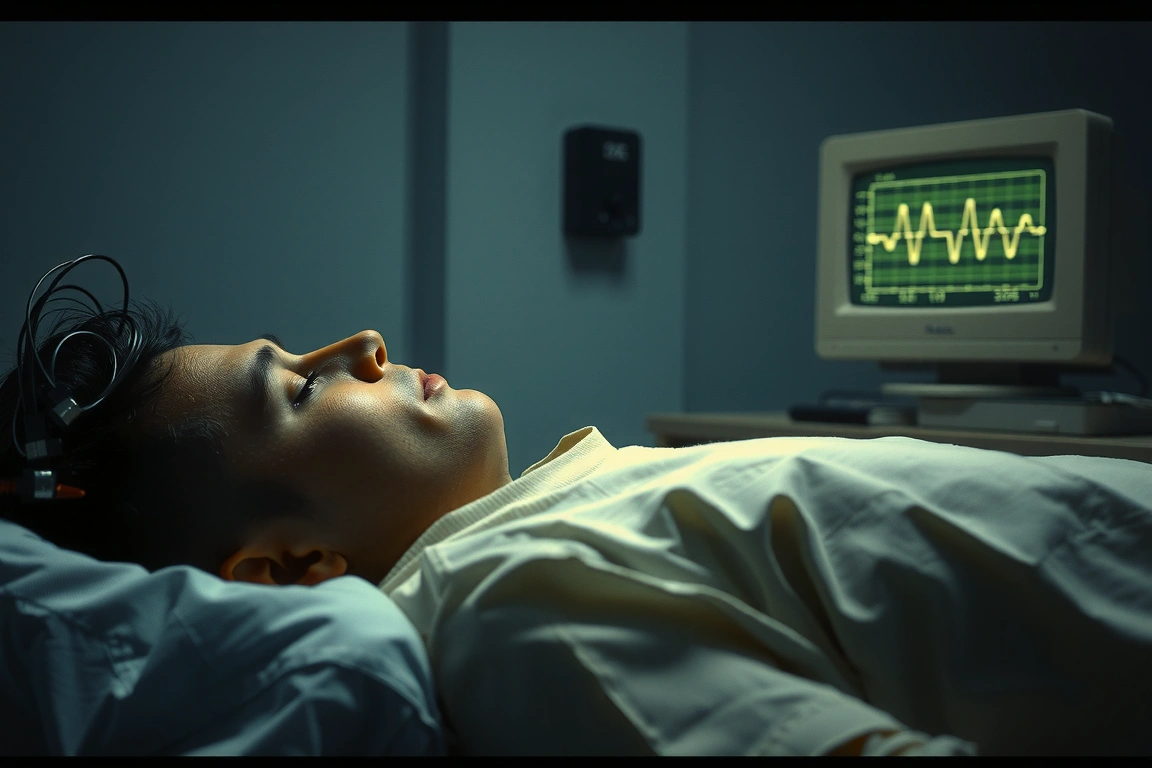
Stages 2 and 3 non-REM sleep deepen the descent. Stage 2, which comprises roughly 45–55% of the night’s sleep cycle in healthy adults, introduces sleep spindles: brief bursts of 12–16 Hz activity that neuroscientists believe consolidate procedural memory—the kind that lets you ride a bicycle without conscious thought. Memory researcher Marie-Jeanne Bastin’s 2016 study in the journal Sleep found that individuals with higher spindle density showed superior performance on visual learning tasks tested the next morning. Meanwhile, Stage 3, commonly called slow-wave sleep or deep sleep, is dominated by delta waves (0.5–4 Hz)—the slowest, most synchronized brain-wave activity of the entire sleep cycle. This stage typically occupies 15–20% of the night and is where the brain performs its most intensive neurochemical housekeeping: clearing metabolic waste through the glymphatic system, consolidating declarative memories (facts, names, events), and strengthening synaptic connections that encode learning.
Then comes REM sleep—rapid eye movement sleep. After 70–90 minutes of the non-REM progression, the brain essentially reboots. Heart rate increases. Breathing becomes irregular. The eyes dart beneath closed lids. Brain-wave activity accelerates toward frequencies resembling waking (15–30 Hz mixed with theta, 4–8 Hz), yet the body becomes nearly paralyzed through a mechanism called REM atonia: the brainstem suppresses motor neurons, preventing the dreamer from acting out their visions. REM sleep accounts for roughly 20–25% of a night’s sleep in adults—though it comprises nearly 50% of an infant’s sleep, suggesting its role in brain development is profound. This is where most vivid, narrative dreams occur, though sophisticated neuroimaging studies by researchers like Thien Thanh Dang-Vu at the University of Montreal have shown that dreams can emerge from any sleep stage, just with different phenomenological flavors.
The Neurochemical Orchestra: Neurotransmitters That Shape Dream Content
The brain during REM sleep is a vastly different neurochemical environment than the waking brain. The difference is stark and measurable. During waking hours, norepinephrine—a neurotransmitter that promotes logical reasoning, skepticism, and attention to external threats—floods the prefrontal cortex, keeping the mind anchored to reality-checking. But when REM sleep begins, locus coeruleus neurons (which produce 95% of the brain’s norepinephrine) virtually cease firing. This withdrawal of rational skepticism is one reason dreams feel so believable in the moment, no matter how impossible their logic.

Simultaneously, acetylcholine—linked to vivid sensory imagery, emotion, and memory processing—surges in the cortex and limbic structures. Serotonin levels plummet, along with dopamine regulation, which correlates with the emotional intensity and sometimes nightmarish quality of dreams. In 2009, Pierre Maquet’s neuroimaging team at the University of Liège scanned dreamers using positron emission tomography (PET) and found that the medial prefrontal cortex—responsible for self-awareness and moral reasoning—showed 23% lower glucose metabolism during REM, while the limbic system and visual cortex lit up intensely. The result: a narrative in which the dreamer is simultaneously protagonist and audience, present yet absent from their own logic. A researcher cannot walk through a wall in waking life, yet in dreams, this impossibility feels inevitable, even unremarkable. The brain knows the rule has been suspended; it simply doesn’t care.
The pons—a section of the brainstem—acts as the neural gatekeeper of REM sleep. During the day, neurons there produce serotonin and norepinephrine. At night, during REM, a different population of cholinergic neurons activates, flooding the forebrain with acetylcholine. This chemical shift isn’t accidental. Animal studies, particularly work by J. Allan Hobson at Harvard Medical School in the 1970s–1990s, showed that direct stimulation of the pons in sleeping cats triggered REM-like brain states and associated eye movements, even in the absence of external stimuli. The pons literally orchestrates the transition into the dreaming state by chemically reshuffling which neurotransmitter systems dominate the higher brain.
Want deeper dream insights?
Free weekly — no spam, unsubscribe anytime.
The Default Mode Network: Where Self-Consciousness Dissolves and Reconstitutes
One of the most significant neuroscientific discoveries of the last two decades is the Default Mode Network (DMN): a set of interconnected brain regions including the medial prefrontal cortex, posterior cingulate cortex, and angular gyrus that activate when the mind turns inward—during mind-wandering, autobiographical memory retrieval, and, critically, during REM sleep. Functional magnetic resonance imaging (fMRI) studies by Randy Buckner and others have shown that the DMN is hyperactive during dreams, yet with a crucial difference from waking mind-wandering. During waking, the DMN remains partially constrained by input from external sensory processing; during dreams, external constraints are lifted. The self-referential narratives that emerge are unchecked, ungoverned, phantasmagoric.
The Default Mode Network’s hyperactivity during REM helps explain why dreams feel so emotionally charged and personally relevant. The brain is churning through autobiographical associations—memories, anxieties, unresolved social conflicts—without the rational regulation that waking consciousness imposes. A dream about being late for an exam, even ten years after graduating, carries the emotional weight of genuine threat because the DMN is processing it as real autobiographical material. Neuroimaging shows reduced activity in the dorsolateral prefrontal cortex (the brain’s CEO for logic and evaluation) simultaneously with heightened DMN activity, a pattern that doesn’t occur during waking thought. The net result: the self becomes fluid, multiple, contradictory. The dreamer can be both observer and actor, adult and child, known and unknown to themselves.
This dissolution of the stable self during REM correlates with heightened activity in regions associated with emotion generation and memory integration: the amygdala, hippocampus, and medial temporal lobes. The posterior cortical regions involved in visual imagery show intense activation, yet the visual input they’re processing originates internally, from memory and imagination, not from the eyes. This is why closing your eyes and imagining something is neurologically similar to dreaming—both bypass external sensory input and rely on internally generated imagery. The brain, during dreams, is essentially in an imagination-native state, with all the sensory, emotional, and memory machinery fully engaged but directed inward.
Sleep Cycles, Brain Waves, and the Architecture of a Night’s Dreaming
A typical adult night’s sleep consists of 4–6 complete cycles, each lasting approximately 90 minutes. The first cycle of the night usually contains only 5–10 minutes of REM sleep and 25–35 minutes of deep delta-wave sleep. But as the night progresses, this ratio inverts. By the fourth and fifth cycles, REM periods expand to 30–40 minutes, while deep sleep virtually disappears. This is why the most vivid, narrative dreams typically occur in the early morning hours, between 6 and 8 a.m., when the final cycles are dominated by REM. Someone who wakes at 5 a.m. and falls back asleep for an hour will spend a disproportionate amount of that hour in REM, generating the intense, complex dreams that people often recall most vividly.

The transition between stages is marked by distinctive brain-wave signatures that polysomnographers—sleep scientists who read sleep recordings—can identify with precision. As Stage 2 non-REM sleep deepens, theta waves (4–8 Hz) become more prominent. K-complexes, sudden spikes of brain activity, occur spontaneously or in response to environmental stimuli, and are thought to protect sleep from disruption—essentially micro-arousals that keep the sleeper stabilized in that stage. When Stage 3 (deep sleep) arrives, delta-wave activity gradually increases until it dominates the EEG, comprising at least 20% of the epoch. Brain temperature drops by 1–2 degrees Celsius. Heart rate falls. The glymphatic system—a network of fluid-filled channels that bathe the brain and clear metabolic byproducts—becomes 60% more active during deep sleep than during waking, according to research by Maiken Nedergaard at the University of Rochester.
The shift into REM is abrupt and unmistakable. The synchronized, slow waves of deep sleep fragment into mixed frequencies resembling wakefulness. The EEG pattern is called “low-voltage, mixed-frequency activity,” and it’s accompanied by theta oscillations in the hippocampus and other limbic structures. Muscle atonia—the paralysis of voluntary muscles—sets in, maintained by inhibitory signals from the pons. For most people, this entire cycle repeats 4–6 times across a 7–9 hour sleep period, creating a structured architecture of alternating conscious states that the sleeper is wholly unaware of. Yet each state generates distinct dream phenomenology: the fragmentary, static imagery of Stage 1 non-REM; the more conceptual, thought-like content of Stage 2; the absence of reported dreams during deep sleep (though neurochemically, the brain is intensely active); and the vivid, hallucinatory narratives of REM.
The Activation-Synthesis Hypothesis and Beyond: Competing Neuroscientific Models of Dream Generation
In 1977, J. Allan Hobson and Robert McCarley proposed the activation-synthesis hypothesis, which proposed that dreams are the brain’s attempt to synthesize coherent narratives from random, spontaneous neural firing in the pons and midbrain during REM sleep. Under this model, the brain receives chaotic sensorimotor signals and, like a confabulating detective, stitches them into stories. A burst of motor cortex activation combined with visual cortex activity might be experienced as “I am running through a hallway”—a post-hoc fabrication of meaning imposed on meaningless noise. The hypothesis was revolutionary because it proposed a mechanistic explanation for dreams: not mystical messages from the unconscious, but the byproduct of REM’s unique neurochemistry.
However, contemporary neuroscience has substantially refined this model. Neuroimaging studies by Thomas Dang-Vu, Pierre Maquet, and others in the 2000s–2010s revealed that REM sleep doesn’t involve random firing at all. Instead, the brain shows highly organized patterns of activity, particularly in the medial prefrontal cortex, limbic regions, and visual cortex. The pons doesn’t send noise; it sends modulatory signals that reorganize how higher brain regions interact. The hippocampus—critical for memory—shows theta-band oscillations (4–8 Hz) that are nearly identical to those during memory encoding in waking, suggesting that dreams involve active memory processing, not passive noise synthesis. Current models propose that dreams represent the brain’s engagement in memory consolidation, emotional regulation, and threat simulation, with the strange logic and imagery arising from the neurochemical constraints of the REM state, not from random noise.
This refinement matters profoundly for interpretation. If dreams are mere noise, they’re epiphenomenal—they don’t signify anything about the dreamer’s psychology. But if dreams reflect organized patterns of memory consolidation, emotional processing, and spontaneous associative thought, then their content reveals something genuine about the dreamer’s preoccupations, fears, and cognitive patterns. Neither position claims dreams are prophetic or contain hidden messages. Both remain grounded in neurobiology. The difference is whether the dream’s narrative structure emerges from the dreamer’s genuine psychological patterns (even if chaotically expressed through REM’s neurochemistry) or is imposed after the fact as the brain tries to make sense of pure noise.
Cultural and Cross-Interpretive Perspectives: How Different Traditions Read the Sleeping Brain
Western neuroscience treats the brain as the locus of dreams—a mechanism to be mapped, a system to be understood through measurement and reductionism. But this represents only one cultural framework for interpreting sleep and dreaming. The Jungian tradition, while rooted in Western psychology, treats dreams as meaningful communications from the unconscious: not random noise, but the symbolic language through which the psyche expresses what consciousness ignores. Jung himself was fascinated by neuroscience’s mechanistic descriptions but argued they didn’t exhaust dream meaning. A dream of drowning in a Jungian framework might represent ego-dissolution before transformation; in strict neuroscientific terms, it’s the limbic system’s threat-simulation system activated by random pons firing, triggering amygdala-mediated fear responses that the cerebral cortex narrates as water. Both descriptions are true. They operate at different levels of analysis.
Indigenous dreamwork traditions—from Aboriginal Australian cultures to Andean and Mesoamerican practices—often treat dreams as communications across permeable boundaries between worlds, or as sites of genuine encounter with other beings or dimensions. The Tibetan Buddhist tradition of dream yoga, documented in texts like the Yoga of the Dream State by Naropa (11th century), treats REM sleep as an opportunity for spiritual practice, training the mind to maintain awareness across sleep stages and to recognize the dream-like nature of all experience. None of these traditions requires rejecting neuroscience. A neurobiologist can acknowledge that REM sleep’s neurochemistry creates conditions for vivid hallucinations while respecting that different cultures have developed meaningful practices—meditation, lucid dreaming training, symbolic interpretation—that use these neurobiological capacities toward purposes the brain didn’t “intend” in an evolutionary sense.
The Jungian concept of the shadow—the repository of repressed, rejected, or disowned psychological material—has no direct neuroscientific equivalent, yet it describes something real in dream phenomenology: the appearance of figures and impulses that the waking ego rejects or disowns. The amygdala’s heightened activity during REM, combined with reduced dorsolateral prefrontal activity, might explain why threatening, embarrassing, or socially unacceptable impulses surface more readily in dreams. The brain’s reality-checking systems are offline. What emerges is what the limbic system, unfiltered, generates. Whether one interprets this Jungian-symbolically (the dream reveals the shadow) or neurobiologically (the dream reflects the pattern of limbic activation without prefrontal inhibition), the phenomenological fact remains: dreams contain material the waking self typically suppresses.
Why the Brain Dreams: Evolutionary and Neuroscientific Hypotheses
The question of why the brain generates dreams has no single agreed-upon answer, despite decades of investigation. The dominant contemporary hypotheses cluster around three functions: memory consolidation, emotional regulation, and threat simulation. The memory-consolidation hypothesis, supported by neuroimaging studies showing hippocampal theta oscillations during REM (similar to waking learning states), proposes that dreams represent the brain’s processing of recent experiences into long-term storage. When someone learns a new skill—playing an instrument, learning a language—REM sleep increases in the nights following intensive practice. Depriving animals of REM
Related from our network
What are the different stages of sleep and their associated brain waves?
Sleep progresses through distinct neurological phases. We transition from waking beta waves to relaxed alpha waves, then into non-REM Stages 1-3 characterized by theta and delta waves for deep sleep. Finally, REM sleep features rapid, low-amplitude waves similar to wakefulness, which is when most vivid dreaming occurs.
Why do our dreams sometimes feel so bizarre and illogical?
During REM sleep, the prefrontal cortex (responsible for logic and self-awareness) is less active, while emotion and memory centers are highly active. This neural environment, coupled with fluctuating neurotransmitters, allows for the surreal narratives, impossible physics, and emotional intensity that characterize our most memorable dreams.
How does the brain physically generate a dream?
Dreams are orchestrated by coordinated electrical activity. Billions of neurons fire in specific rhythmic patterns, creating measurable brain waves. Simultaneously, neurotransmitters flood and recede, activating sensory, memory, and emotional circuits to construct immersive, narrative experiences entirely from within the sleeping brain.
What is the purpose of dreaming from a neuroscience perspective?
While the exact “why” remains debated, neuroscience suggests dreaming supports memory consolidation, emotional processing, and cognitive maintenance. The specific neural activity during sleep stages, particularly REM, appears crucial for integrating experiences and strengthening synaptic connections, essentially helping the brain organize and make meaning.
You Might Also Like



What Are Your Dreams Telling You?
Join The Dream Files — weekly dream symbols, hidden meanings, and the archive that maps 4,000 years of the subconscious.
No spam. Unsubscribe anytime.
